 Ale Cabrera
You Have Engineers. Do You Need a Product Manager?
October 2, 2026 · 4 min read · Product Strategy & Leadership
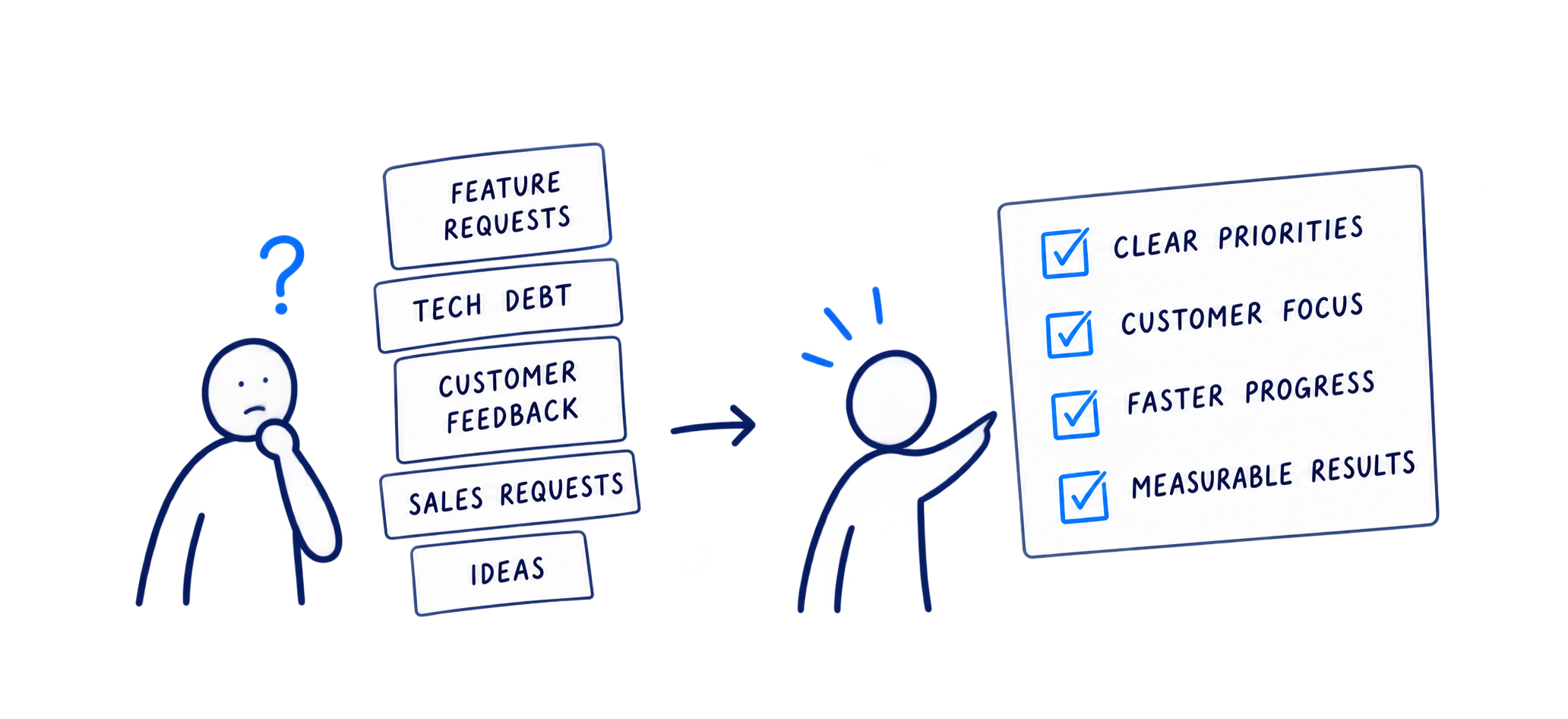
Your team knows how to build. But who decides what is worth building?
At the start, that person is you. You know why the company exists. You talked to the first customers. You decide fast because you have the context.
Then the company grows. More customers, more requests, more engineers. Suddenly everyone needs your input, and you are also running a company.
You are not making bad decisions. There are just more decisions than one person can make.
3 questions to ask yourself
- Do we know which customer problems matter most right now?
- Can my engineers move forward without waiting for me on every product decision?
- After we ship, do we check if it worked?
Three times yes? You don't need a product manager yet.
One no? That is where product help pays off.
What that help looks like
At Clearbit, customers were reporting wrong data. Engineering could fix each error, one by one. The product work was a different question: which errors matter to customers, where do we stop them, and how do we know it worked?
We put guardrails in the pipeline, before the data reached customers. Customer-reported data issues went down 70%.
The engineering work was essential. Deciding which problems to prevent, where to put the guardrails, and how to measure the impact was product work.
It doesn't have to be a full-time hire
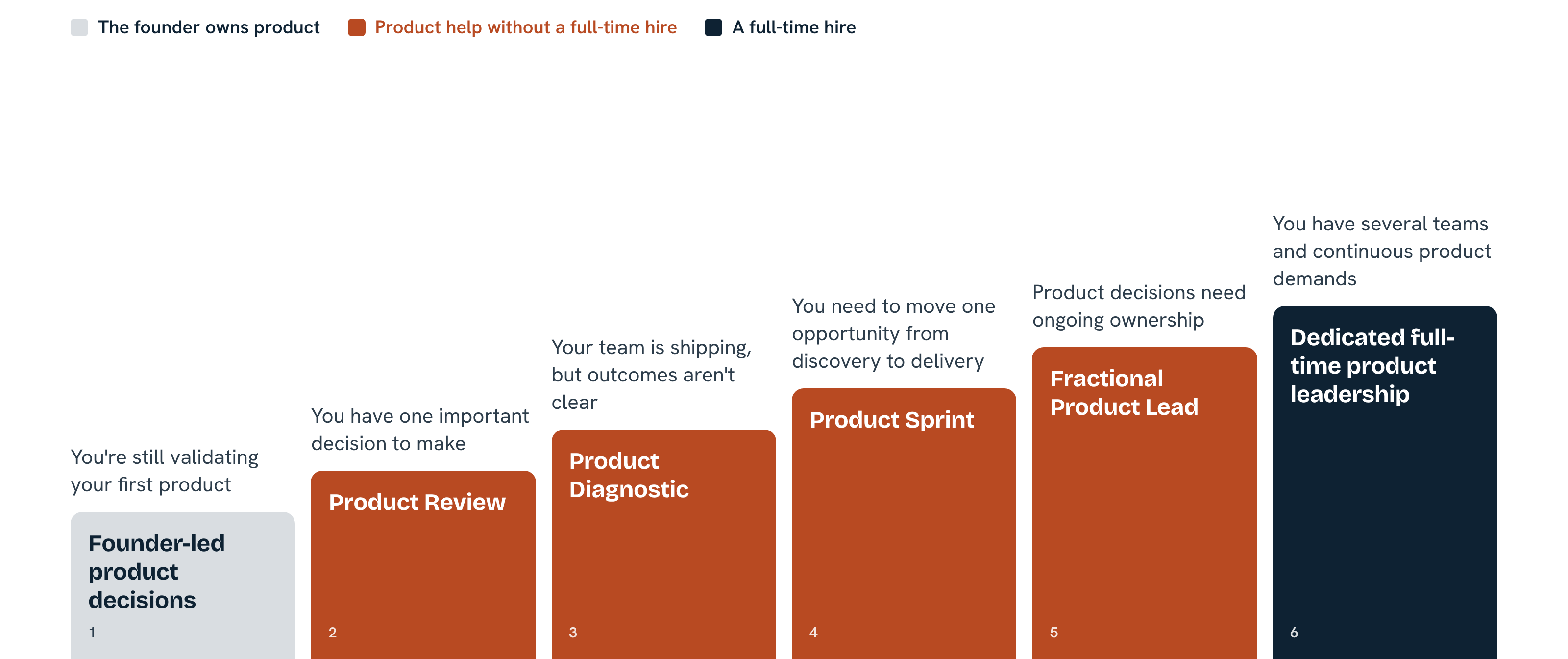
- One important decision to make: a Product Review
- Shipping, but outcomes aren't clear: a Product Diagnostic
- One opportunity to take from discovery to delivery: a Product Sprint
- Product decisions need an owner: a Fractional Product Lead
And a good product person is not one more bottleneck. No meeting for every decision. No tickets for the sake of tickets. Engineers should not need permission to think about customers.
The goal isn't to hire a Product Manager. The goal is to make better product decisions.
Send me one feature that isn't landing. In 30 minutes I'll tell you the first 3 things I'd check.